

You need a Quest.
Here's ten quests to help you kick the tires and light the fires.

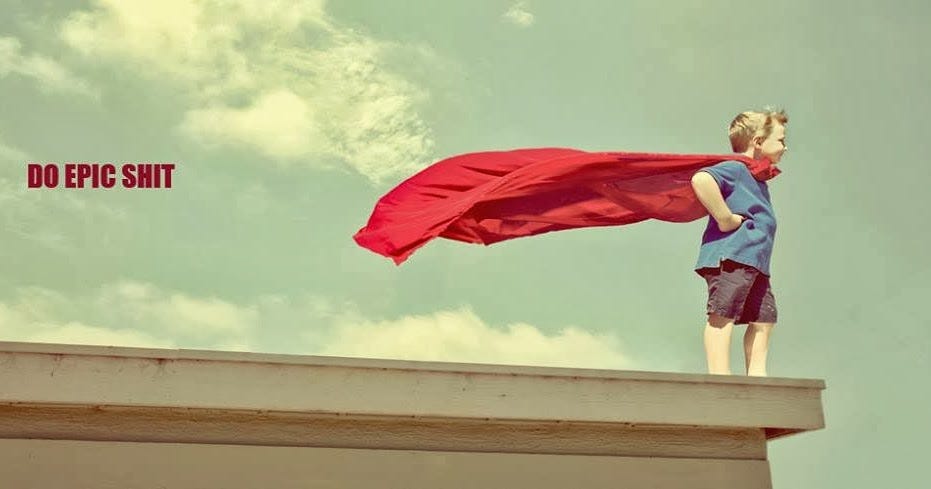
You don’t need to read another blog or watch a reel or have another meeting.
You need a quest.
A short, sharp singular focus that, for that moment, pushes out everything else.
A pattern interrupt to re-calibrate mentally, physically and emotionally. I personally have used numerous of these as not only mini adventures but also as tools in the toolkit in the battle against the sheer volume and strife of a distracted modern world.
Pick one a month or one a season, either way, here’s a grab-bag of solo quests.
Go.
Quest 1: The Legionnaire
Category: Physical discomfort
Difficulty: Hard, but doable with preparation
Objective
Walk 50 km in a single push, starting at sunset and finishing after sunrise.
Rules
Pick a safe, known route (urban loop, coastal path, or trail) where you can legally and realistically walk through the night.
Start within 30 minutes of sunset. No running; the challenge is time‑on‑feet, not speed.
Carry everything you need (water, snacks, extra layer, basic first aid) in a small pack.
No podcasts, music or calls, this is you, your thoughts, and the dark.
You may stop to rest, but no sleep.
If you would prefer to do this with another person for safety, do so.
Reflection questions
At what point did you most want to stop, and what story were you telling yourself in that moment?
What did walking through the night show you about your relationship to discomfort and boredom?
Compare your state of mind at sunset versus sunrise. What felt different in terms of noise, quality of thoughts, what’s changed?
Next time, could you do this with a weighted ruck? Or go for 24 hours?
Quest 2: Old School
Category: Mental clarity
Difficulty: Medium (harder than people expect)
Objective
Spend 24 hours with zero electronic input.
Rules
Choose a 24‑hour window and tell anyone who needs to know that you’ll be offline.
From waking to sleeping: no phone, laptop, tablet, TV, streaming, music, podcasts, or e‑readers.
Paper books, notebooks, pens, physical maps and board games are allowed.
Notice, but don’t judge, how often you reach for a device by habit.
Reflection questions
When were you most uncomfortable without a device, and what were you trying to avoid feeling or thinking about?
What, if anything, felt better without screens for a day?
Next time could you do a full weekend/48 hours?
Quest 3: Happy Hour
Category: Mental clarity
Difficulty: Medium
Objective
Sit in silence for one hour, three times in a week.
Rules
Three separate sessions of 60 minutes each in one week: one in the morning, one afternoon, one evening.
Sit somewhere safe and quiet. No phone, no reading, no music, no meditations apps. Just you and your breathing.
Eyes can be open or closed, but no intentional “doing” (no planning, no lists). Notice whatever comes up.
This is not nap time.
When you want to stop, note where your thoughts are, what are you trying to avoid or not think about?
Reflection questions
What themes or worries kept recurring when there was nothing to distract you?
Did your internal dialogue become kinder, harsher, or just louder over the three sessions?
Did one time over the others seem to provide a greater degree of comfort or discomfort?
Could you integrate a scaled down version of this as a daily practice?
Quest 4: The Dawn
Category: Energy and vitality
Difficulty: Easy–medium (might be logistically demanding)
Objective
Watch the sunrise outside every day for seven days.
Rules
For seven consecutive mornings, set your alarm (if necessary) to be outside at least 5 minutes before sunrise.
No headphones, no phone, no books
Stand, sit, or walk slowly—just be there. Notice light, temperature, sounds.
Stay outside for at least 10 minutes
Aim for a consistent bedtime for the week as well.
Reflection questions
How did this affect your energy, mood and sleep over the days and week?
Did anything about your sense of time, urgency, or “what matters today” shift when you started with the sky instead of a screen?
Quest 5: Stargazer
Category: Identity and perspective
Difficulty: Medium (higher if you’re not used to being alone outdoors)
Objective
Spend one full night camping alone under the stars.
Rules
Ideally you want a clear night, plan ahead.
Choose a safe, legal place within reach of home (can even be your backyard)
Arrive before dark; set up your sleeping bag/bivvy, cook or prepare a simple meal, and then let the night happen.
No tent, sleeping with the sky and stars above.
No streaming. Phone only for safety/emergencies.
Stay until at least 30 minutes after sunrise the next morning before packing up.
Reflection questions
What did being alone in the dark actually feel like versus what you expected?
Did any fears, memories, or ideas show up?
Quest 6: Cold Finish
Category: Physical discomfort
Difficulty: Medium–hard
Objective
For seven consecutive days finish your shower with 30 seconds of only cold water.
Rules
Have your normal temperature shower but finish on full cold and count out the 30 seconds.
Do not turn the hot back on, finish on cold and get out and dry as normal.
Focus on breathing and counting when it gets difficult
Reflection questions
How did you feel immediately after?
Did you notice a difference in how you felt in the minutes and hours following?
By day 7 is it still as difficult? What’s changed?
Quest 7: My Happy Place
Category: Physical Discomfort and Clarity
Difficulty: Medium (counterintuitively more a mental challenge that physical)
Objective
Complete 1000 consecutive burpees
Rules
You can time this but the point is not the time taken
This is a mental exercise as much as physical, keep this in mind when you want to quit
You can scale this to a lower number but the ultimate goal is 1000 in a single session, working up to that goal is completely acceptable
Don’t die or injure yourself. Hydrate, eat.
Movement does not need to be continuous, ie you might do 100, walk for 30 seconds and then continue, but you remain until the job is done
Reflection questions
How confident were you that you could do this prior?
What other self-imposed limitations are you currently operating under?
What mental strategies worked and which did not help?
Quest 8: The Scribbler
Category: Mental Clarity
Difficulty: Easy (but not simple)
Objective
For 7 days; every evening spend 5-10 minutes writing out by hand on paper everything that is concerning you, worrying you, taking up mental bandwidth. Just scribble them all down. Then every morning write out by hand the 3-4 things that if you were to achieve them today you would go to bed tonight happy with your efforts.
Rules
The evening dump is not about solving the problems, it is about dumping them out of our minds before bed. You can literally throw the paper out when you’re done if you wish.
This is a pen/pencil and paper exercise only, the physical act is important.
This is not about judgement or performance, think of it as more of a ceremony than some great psychological exercise.
Don’t overthink it.
Reflection questions
How many of your concerns are realistically out of your control?
How many days were you achieving what you set to do and yet not recognising that day as an act well done?
Did you notice a difference in your focus during the day or your level of relaxation overnight?
Quest 9: The Gift
Category: Perspective
Difficulty: Easy
Objective
Perform three acts of service/volunteering in a single month
Rules
Find a local service (food share/distribution, event help, elderly homes, mentoring, clean up days) where you can volunteer.
This is about your time and physical presence, not financial contribution.
After each session, jot some notes on what you did, who you interacted with, what you observed.
Include your children if it is appropriate or suitable
Reflection questions
What surprised you about the people you were assisting?
Did you feel any different after each session?
What did you notice about the traits, behaviours and demeanour of other people volunteering with you?
Quest 10: The Juggler
Category: Mental Clarity
Difficulty: Medium
Objective
Spend 10 minutes a day for 30 consecutive days learning how to juggle.
Rules
Use 3 objects smaller than a tennis ball. A hacky sack kind of size and feel is ideal
Do not learn to juggle chainsaws, knives or flaming things
Use any resource you wish to learn, videos etc, find one that makes sense to you.
You will most likely be terrible for a significant amount of time
Don’t overthink it.
Reflection questions
When you were practising and juggling, could you think about anything else at the same time? When and where else might such a short, focussed act be useful?
Were there particular methods that helped more than others in learning such as the way someone explained it or demonstrated it? What does this tell you about how you learn best?
Given 30 days of focus what else could you learn?
You can upscale or downscale these as necessary, use them as a springboard to generate your own. Modify and use them as a bit of bonding with friends or your kids (I regularly have daily step count challenges with our boys for example).
There are levels to this stuff. These are not Misogi size challenges, that’s a different level entirely and something I covered here if you’re interested (and you’ve graduated to the next level of Questing!)
In Search of a Better Misogi

On paper you could argue that I’m a poster child for the Misogi concept.
That 24 hour no tech quest might be what I try. Love this list!
"My happy place" That's a sinister title for quest 7. nice article.